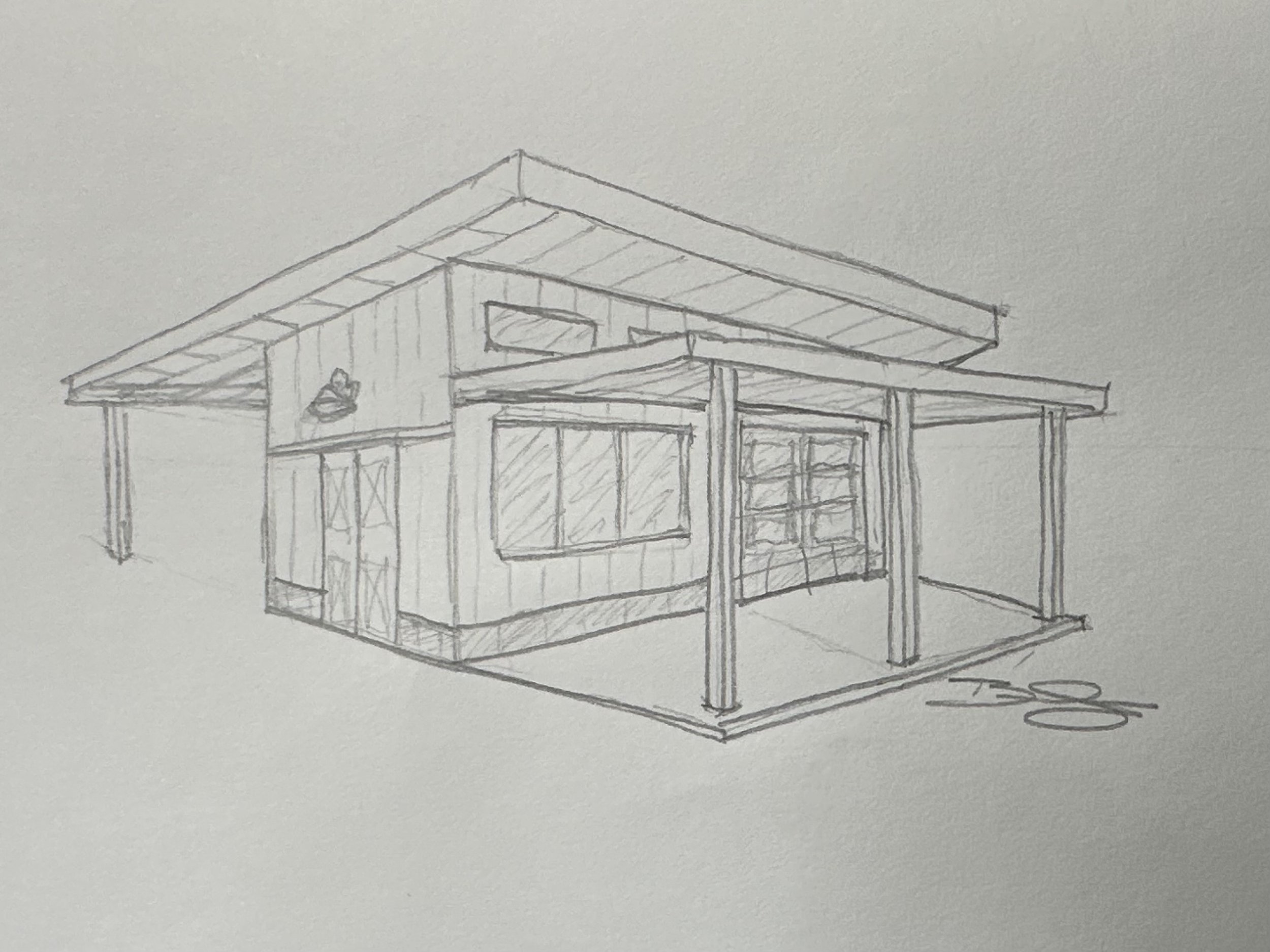
Workshops, mechanic and fabrication shops, insulated shops with bathrooms and mezzanines, engineered metal shop buildings, and post-frame shops — built for coastal NC wind and humidity, permitted and inspected.
Hobby space, working shop, or small-commercial. Same permitting discipline, same coastal engineering.
🔧
Mechanic & Auto Shops
Tall clear heights for two-post and four-post lifts, wide overhead doors, thickened slab sections under lift anchors, compressed air lines, and 220V service. Built for people who actually work in them.
🔨
Fabrication & Welding Shops
Heavy electrical service, ventilation, concrete rated for equipment loads, and clear-span framing so you are not working around posts. Roll-up or sliding doors sized for material handling.
🪛
Woodworking Shops
Dust collection rough-in, dedicated circuits, ample lighting, and conditioned, dehumidified space — because coastal humidity destroys lumber and machine surfaces if you do not plan for it.
🏭
Insulated & Conditioned Shops
Spray foam or batt insulation, mini-split or ducted HVAC, vapor control, and a slab detail that does not sweat. The difference between a shop you use year-round and one you avoid from June to September.
🏗
Metal & Steel Shop Buildings
Engineered steel frames with metal wall and roof panels. Longest clear spans, lowest maintenance, excellent coastal wind performance, and a fast build. Great value at larger footprints.
🏗
Post-Frame / Pole Barn Shops
Laminated columns and girts instead of a full foundation wall. The most cost-effective way to enclose a big footprint, and easy to expand later with a lean-to or bay addition.
🛀
Shops with Bathrooms
Half bath or full bath, utility sink, water heater, and a break area. Plumbing under the slab is cheap during construction and painful afterward — decide before we pour.
🧱
Shops with Mezzanines & Lofts
Second-level storage or office over part of the footprint. Adds usable area without adding roof, and it is the cheapest square footage in the building.
🏢
Commercial & Contractor Shops
Equipment yards, contractor storage and staging, service bays, and small commercial outbuildings for business property in New Hanover, Brunswick, Pender, and Onslow counties.
Sizing Guide
What Size Shop Do You Actually Need?
The single most common regret we hear is "I should have gone twenty feet longer." Footprint is the cheapest thing to add on paper and the most expensive to add later. Height matters just as much — if a lift is ever in the plan, you need 12 feet of clear height minimum and 14 is better.
24×24 – 24×30: hobby shop, two vehicles, workbench and storage
30×40: the sweet spot — two bays plus real bench, storage, and room to move
40×60: working mechanic or fabrication shop, lift, equipment, material storage
50×80 and up: small commercial, contractor yard, multi-bay service operation
Lean-to additions: cheap covered space along one or both long walls
Ranges only — not quotes. Site clearing, grading, driveway, utility runs, and impact fees are priced separately. $250 estimate credited to your project at signing.
Common Questions
Shop Building FAQ
Shop building costs in southeastern North Carolina generally start around $35,000 for a modest single-bay workshop and run past $140,000 for a large insulated multi-bay shop with a bathroom, HVAC, and a mezzanine. Common benchmarks in our market: a 24×30 shop runs roughly $35,000–$60,000, a 30×40 shop $55,000–$95,000, a 40×60 shop $85,000–$140,000, and a 50×80 or larger commercial-scale shop $130,000–$250,000+. Foundation type, insulation, door count and size, electrical service, and whether you finish the interior move those numbers more than anything else.
Post-frame (pole barn) construction sets laminated columns into or on top of the ground and spans between them — the most economical way to enclose a large footprint, with wide clear spans and fast erection. Stick-built uses conventional wood framing on a continuous foundation, which is easier to insulate, finish, and later convert to conditioned or habitable space. Engineered metal buildings use a steel frame with metal panels, giving you the longest clear spans, the lowest maintenance, and excellent performance under coastal wind loads. We build all three and will tell you honestly which fits your use and budget.
Almost everyone we build for wishes they had gone bigger. A 24×30 handles a hobby workshop or two vehicles with a workbench. A 30×40 is the sweet spot for a serious home shop — two bays plus real bench and storage space. A 40×60 supports a working mechanic or fabrication shop with a lift, and a 50×80+ moves into small-commercial territory. Ceiling height matters as much as footprint: if you ever want a two-post lift, you need at least 12 feet of clear height, and 14 is better.
Yes to all three, and the time to decide is before we pour. A bathroom means running water and waste lines under the slab, which is cheap now and expensive later. Insulation and conditioning turn a shop from a summer sauna into a space you will actually use in July and August — in coastal NC humidity, a spray-foamed and conditioned shop is the difference between working and not. Mezzanines, break rooms, utility sinks, air lines, and 220V circuits are all worth roughing in during construction.
Effectively always. Any structure of meaningful size requires a building permit, and depending on the jurisdiction you may also need zoning approval, a stormwater or impervious surface review, a setback verification, and electrical and plumbing permits. Accessory structure size, height, and placement are all regulated. BTL Buildings handles permitting as part of scope — we submit the plans, work the review comments, and schedule the inspections.
They are engineered for the applicable wind zone for your address, which in New Hanover, Brunswick, Pender, and Onslow counties is significantly more demanding than inland North Carolina. That affects column spacing, anchor detail, sheathing and fastener schedules, door selection, and roof attachment. A kit building shipped from out of state is not automatically compliant here, and an under-engineered shop is the one that peels open in a hurricane.
It can, but only if it was built with that in mind. Habitable space triggers a different set of code requirements: foundation and slab detail, insulation and vapor control, egress windows, ceiling height, ventilation, and energy code compliance. If there is any chance you will want an apartment, office, or ADU in that building someday, tell us now — roughing in plumbing and framing to residential standards during the original build costs a fraction of retrofitting it.
Ready to Build Your Shop?
Site visit, real measurements, written itemized proposal. Not a phone ballpark that doubles at framing.